
The Mystery Vault
Explore Cases
Contact Us
The USS Nimitz "Tic-Tac" encounter was a highly publicized
Unidentified Aerial Phenomenon (UAP) incident that took place on
November 14, 2004, off the coast of Southern California. During a
routine training exercise, pilots from the United States Navy's
carrier strike group reported observing a smooth, white, oblong
object unlike any conventional aircraft they had previously
encountered. The object, later nicknamed the "Tic-Tac" due to its
shape, was detected by radar operators and visually observed by
military personnel. According to witness accounts, the
unidentified craft demonstrated extraordinary flight
characteristics, including rapid changes in altitude, sudden
acceleration, and maneuvering capabilities that appeared beyond
the performance limits of known aircraft. The incident gained
widespread attention years later after military footage and pilot
testimonies became public, turning the Nimitz encounter into one
of the most discussed and investigated UAP cases in modern
history.
If the Tic-Tac incident remained largely unknown to the public for more than a decade before unauthorized disclosures brought it to light, what other information about the encounter—or other military UAP incidents—might the government still possess but have not made public?
The USS Nimitz "Tic-Tac" encounter refers to a series of unusual events that occurred during a United States Navy training exercise off the coast of Southern California in November 2004. What began as the investigation of mysterious radar contacts soon developed into one of the most documented and debated UAP incidents in modern history. The encounter involved multiple Navy assets, including fighter aircraft, radar-equipped warships, and trained military personnel who independently reported observing an unidentified object exhibiting unusual flight behavior. At the center of the incident was a smooth, white, oblong object later nicknamed the "Tic-Tac" because of its distinctive shape. According to radar operators and pilots involved in the event, the object displayed remarkable maneuverability, appearing to accelerate, change direction, and alter altitude in ways that seemed difficult to explain using conventional aerospace technology. Although numerous theories have been proposed over the years, no universally accepted explanation has emerged, leaving the encounter a subject of ongoing investigation and debate.
In the weeks leading up to the famous encounter of November 14, 2004, radar operators aboard the USS Princeton, a Ticonderoga-class guided missile cruiser assigned to the USS Nimitz Carrier Strike Group, began tracking a series of unusual aerial contacts over the Pacific Ocean. Using the ship's advanced AN/SPY-1 radar system, operators repeatedly detected unidentified objects appearing at extremely high altitudes—often above 80,000 feet—before descending rapidly toward sea level in a matter of seconds. After reaching lower altitudes, the objects would sometimes hover or remain stationary for extended periods before disappearing from radar or accelerating away. At first, the radar team suspected equipment malfunctions, atmospheric interference, or false returns. However, the contacts continued to appear over multiple days, prompting operators to conduct diagnostic checks on the Princeton's systems. According to later accounts from personnel involved, the radar equipment appeared to be functioning normally, and the mysterious tracks persisted despite repeated attempts to explain them as technical errors. The objects also failed to transmit identification signals and did not match any known civilian or military flight activity in the area.
As the reports accumulated, the contacts became difficult to dismiss as isolated anomalies. What initially seemed like a radar mystery was gradually developing into something more significant. By November 14, commanders decided that the next appearance of one of the unidentified targets would warrant a direct investigation by Navy fighter aircraft—a decision that would soon lead to the encounter that made the "Tic-Tac" incident famous.
On November 14, 2004, after days of tracking unusual radar contacts, personnel aboard the USS Princeton decided to dispatch aircraft to investigate one of the mysterious targets directly. At the time, two F/A-18F Super Hornets from Strike Fighter Squadron 41 were conducting routine training exercises approximately 100 miles southwest of San Diego. The aircraft were piloted by Commander David Fravor, Lieutenant Commander Jim Slaight, and their respective weapons systems officers. Their training mission was interrupted when controllers aboard the Princeton redirected them toward the location of an unidentified radar contact. As the fighters arrived in the designated area, the pilots immediately noticed something unusual below them. The ocean surface appeared disturbed, with a patch of churning white water standing out against the otherwise calm sea. Fravor later described it as looking as though a large object might have been just beneath the surface. Hovering above the disturbance was a smooth, white, oblong craft unlike any aircraft known to the pilots. The object was estimated to be roughly 40 feet (12 meters) in length and resembled a large Tic-Tac mint. It possessed no visible wings, tail, rotors, control surfaces, engine nacelles, or exhaust plume. According to the pilots, the craft appeared to move freely through the air despite the absence of any obvious means of propulsion.
Seeking a closer look, Fravor began descending in a circular maneuver toward the object. As he did so, the Tic-Tac appeared to react to his presence. Witnesses later reported that the object mirrored aspects of the fighter's movements, maintaining separation while displaying rapid and unpredictable motion. Fravor attempted to close the distance, but before an intercept could be completed, the object suddenly accelerated away. The pilots reported that it vanished from view within moments, moving so quickly that they were unable to follow it. What had begun as an investigation of unusual radar contacts had now become a direct visual encounter witnessed by trained military aviators. The significance of the event was heightened by the fact that the sighting involved multiple observers and occurred in conjunction with the radar tracks that had been recorded by the USS Princeton. The encounter transformed what many initially suspected might be a sensor anomaly into one of the most discussed UAP incidents in modern aviation history, setting the stage for further reports, radar observations, and the collection of additional sensor data later that day.
In the immediate aftermath of the encounter, the incident did not receive significant public attention and remained largely confined to military channels. Personnel involved in the event later stated that the encounter was discussed and reviewed internally, though few details about any early investigations were made public. Some witnesses also claimed that individuals they believed to be intelligence personnel collected radar data, recordings, and other materials related to the incident. These accounts have been widely discussed by researchers, although the full extent of any data collection efforts has never been publicly confirmed. Interest in the case grew in later years when it reportedly became one of the incidents examined by the Advanced Aerospace Threat Identification Program (AATIP), a Pentagon initiative established in 2007 to investigate reports of unusual aerial phenomena. For more than a decade, the Nimitz encounter remained relatively unknown outside military and research circles. That changed in 2017 when leaked military videos and media reports brought the incident to public attention, sparking renewed interest in the encounter and the broader subject of unidentified aerial phenomena.
In April 2020, the United States Department of Defense officially released three Navy videos that had already circulated online, including footage associated with the Nimitz incident. The Pentagon stated that the videos were authentic military recordings and released them to address confusion regarding their status. The encounter later became a topic of congressional discussion, most notably during public hearings on UAPs in 2023, where former Navy personnel, including Commander David Fravor, provided testimony regarding their experiences. Subsequent reviews by government agencies, including the All-domain Anomaly Resolution Office (AARO), examined the available information related to the incident. While investigators found no definitive evidence linking the encounter to extraterrestrial technology, they also concluded that the available data was insufficient to provide a conclusive explanation. As a result, the USS Nimitz "Tic-Tac" encounter remains one of the most extensively discussed and debated UAP cases in modern history.
David Fravor later said that during the USS Nimitz training exercise, conditions were clear with light winds and calm seas. After reaching the area, the pilots were instructed by air traffic control to proceed to a specific location where an unidentified object had been reported. While closing in on the position, he observed a small, white, featureless object described as resembling a “tic-tac” shape. The object appeared elongated along a north-south axis and was seen moving abruptly just above the surface of the ocean in an erratic manner, compared to a ping-pong ball skimming across water. He reported no visible signs of conventional propulsion or aerodynamic structure, noting the absence of rotor systems, wings, or other control surfaces typically associated with aircraft. The object’s behavior appeared inconsistent with known flight characteristics. According to his account, the object transitioned from visual contact to radar loss, after which operators reportedly indicated that it had reappeared approximately 60 miles away in less than a minute. Fravor also referenced radar-related anomalies during the encounter, including suggestions of interference or jamming affecting the APG-73 radar system, though the original recordings and associated documentation are not clearly accounted for in publicly available records.
Alex Dietrich later said that during the USS Nimitz training exercise, she was flying as part of a two-ship formation when they were redirected toward an unidentified contact reported in the area. After arriving at the designated location, she visually acquired a small, white, featureless object near the surface of the ocean. She described it as smooth and elongated, consistent with a “tic-tac” shape, with no visible wings, rotor systems, exhaust plume, or other conventional signs of propulsion. She reported that the object appeared to move in an unusual and highly dynamic manner, accelerating and changing direction in a way that did not match known aircraft performance. The encounter involved close visual range observation, during which both pilots attempted to assess and track the object while maintaining formation coordination. According to her account, the object eventually moved out of visual range, and the situation transitioned to radar and communication tracking handled by other assets involved in the exercise. She has consistently emphasized that the experience was unexpected, disorienting, and unlike any training scenario or known aerial behavior she had previously encountered.
More than two decades after the encounter, the USS Nimitz "Tic-Tac" incident remains one of the most widely discussed and extensively documented UAP cases in modern history. Unlike many reports of unidentified objects, the event involved multiple military witnesses, radar observations, and sensor recordings, all occurring during a routine training exercise conducted by one of the world's most advanced naval forces. The combination of visual sightings and supporting sensor data helped elevate the case beyond a typical UFO report and brought it to the attention of researchers, journalists, government officials, and the general public. The encounter has played a significant role in changing how unidentified aerial phenomena are discussed within both government and civilian circles. It contributed to renewed interest in the study of unexplained aerial events and became a frequently cited example during public debates about UAPs. Despite years of analysis and investigation, no universally accepted explanation has emerged. Whether viewed as a case of advanced technology, misidentification, sensor anomalies, or something entirely unknown, the USS Nimitz encounter continues to occupy a unique place in the history of modern aviation mysteries.
Why were the F/A-18s sent to investigate the Tic-Tac while carrying no live weapons? What made the Navy think it was appropriate to send two effectively unarmed aircraft to investigate something so peculiar? Unless the encounter was planned and there was no need for them to be armed in the first place?
If the USS Princeton had been tracking these unidentified objects for several days, why were they not intercepted sooner? Even if the radar contacts were initially suspected to be equipment or software errors, would the U.S. Navy really have left unexplained contacts in the vicinity of a carrier strike group uninvestigated for so long—especially after repeated radar checks reportedly showed that the systems were functioning normally?
One explanation suggests that the Tic-Tac was an advanced human-made aircraft or drone rather than an unknown phenomenon. Some believe it may have been part of a highly classified U.S. military program, citing the long history of secret aerospace projects developed and tested without public knowledge. Others have proposed that it could have been an experimental platform operated by a foreign power, such as Russia or China, gathering intelligence near a military exercise. Supporters of this theory argue that advanced technology could explain the object's unusual behavior without requiring an extraordinary explanation. However, critics note that no known aircraft has publicly demonstrated all of the capabilities reported by witnesses, including the object's apparent acceleration, maneuverability, and lack of visible propulsion. As a result, the theory remains plausible but unproven.
One skeptical explanation argues that the extraordinary performance attributed to the Tic-Tac may have resulted from a combination of optical illusions, sensor limitations, and misinterpreted data rather than the object itself. Supporters of this theory suggest that factors such as viewing angle, distance, relative motion, and the parallax effect could make a conventional object appear to move far faster or more erratically than it actually was. Likewise, radar systems can occasionally produce false tracks, duplicate contacts, or inaccurate readings due to atmospheric conditions, software issues, or operator interpretation. Proponents also point to the infrared footage released by the Pentagon, arguing that camera tracking behavior and sensor characteristics can create misleading impressions of speed, acceleration, or unusual movement. According to this view, the encounter may have involved a combination of ordinary objects and imperfect sensor data rather than a craft displaying extraordinary capabilities. Critics of the theory, however, note that it must account for multiple witnesses and different sensor systems reporting unusual observations during the same event.
One of the most well-known explanations for the Nimitz encounter is that the Tic-Tac represented technology created by a non-human intelligence. Supporters of this theory point to witness reports describing rapid acceleration, unusual maneuverability, and the apparent absence of wings, control surfaces, or visible propulsion systems. They argue that these characteristics are difficult to reconcile with publicly known aerospace technology and may indicate a technological capability beyond current human engineering. Some proponents have suggested that the object employed an advanced form of propulsion capable of overcoming the limitations of conventional aircraft. Hypothetical concepts such as gravity manipulation, space-time distortion, or other unknown propulsion methods are often cited as possible explanations for the reported performance. However, no physical evidence confirming a non-human origin has ever been presented, and government investigations have not concluded that the object was extraterrestrial. As a result, while the theory remains popular among many researchers and enthusiasts, it remains speculative and unproven.
Another explanation proposes that the Tic-Tac encounter may have been caused by an unusual combination of natural atmospheric and environmental conditions rather than an artificial craft. Supporters of this theory suggest that rare phenomena such as plasma formations, temperature inversions, unusual radar propagation, or other atmospheric effects could potentially create misleading sensor returns and visual observations. Under certain conditions, radar systems can detect false or distorted targets, while haze, reflections, and changing light conditions may affect how distant objects appear to observers. Some researchers have also suggested that natural phenomena occurring over the ocean could have contributed to the encounter. The disturbed water observed by the pilots, for example, may have been caused by marine activity, underwater geological processes, or other environmental factors unrelated to an aerial object. Proponents argue that a combination of atmospheric effects, sensor anomalies, and natural events could have created the impression of a highly unusual craft. Critics, however, contend that this explanation struggles to account for the consistency of the witness reports and the multiple sensor systems involved in the incident.
Have a question for this mystery?
Think there's something TMV should ask? Contact TMV with your question for a chance to see it featured right here.
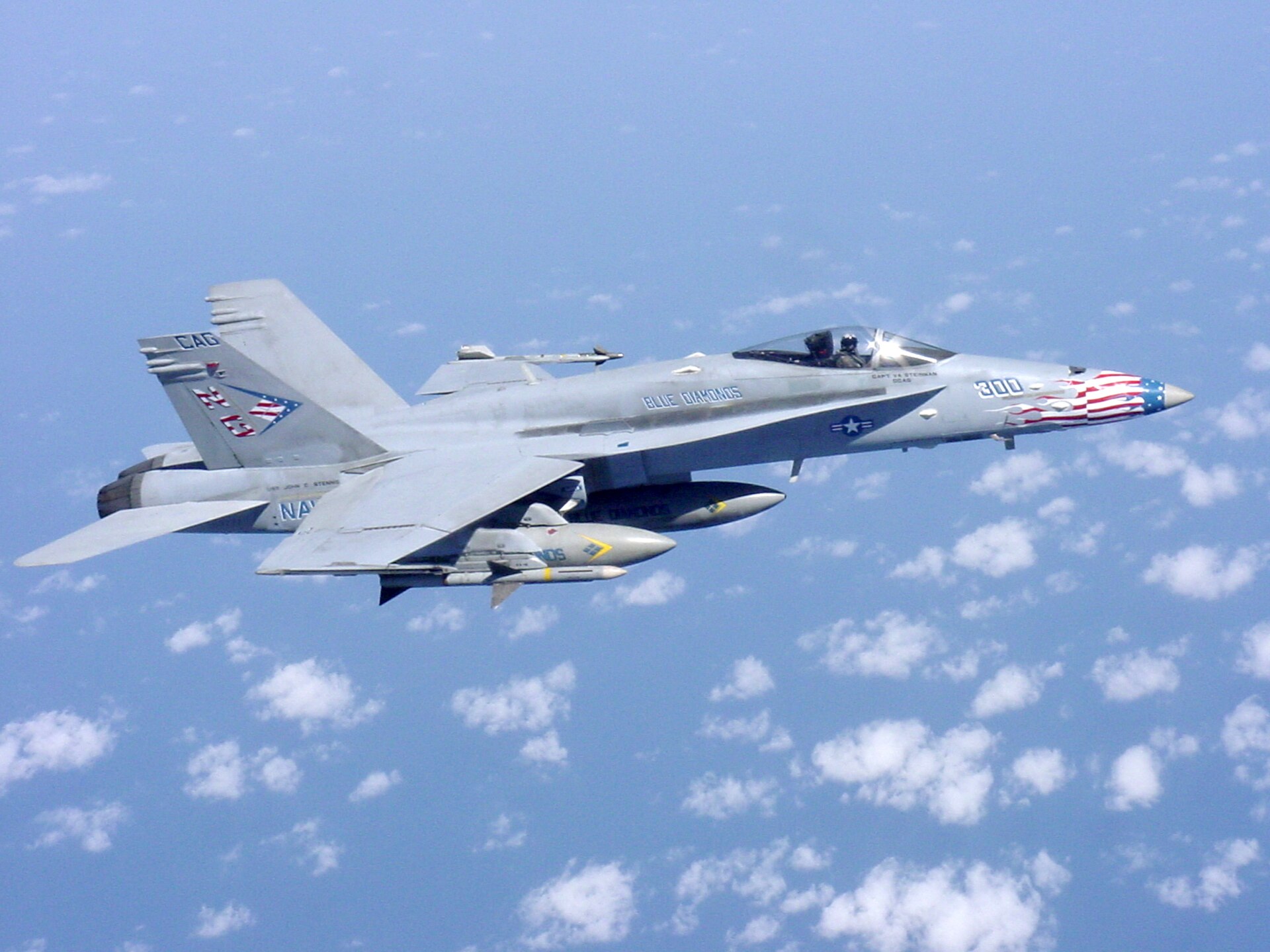
Source: Wikipedia Commons
Author: U.S. Navy photo by Lt. Kyle "Chet" Turco.
Date: 2015
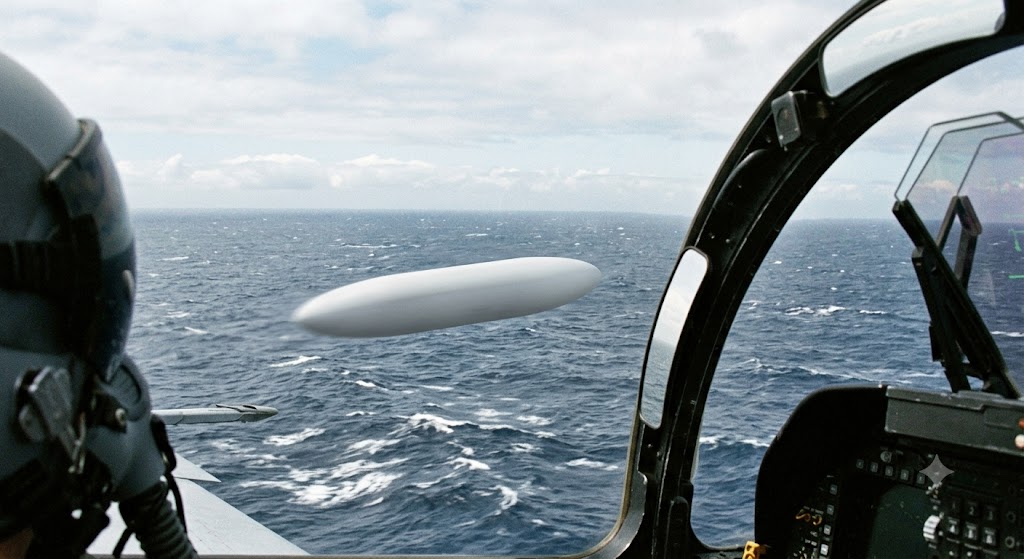
Author: AI for TMV
Date: --Unavailable--
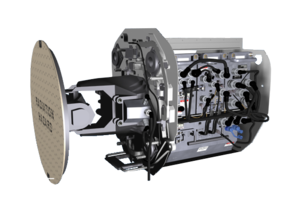
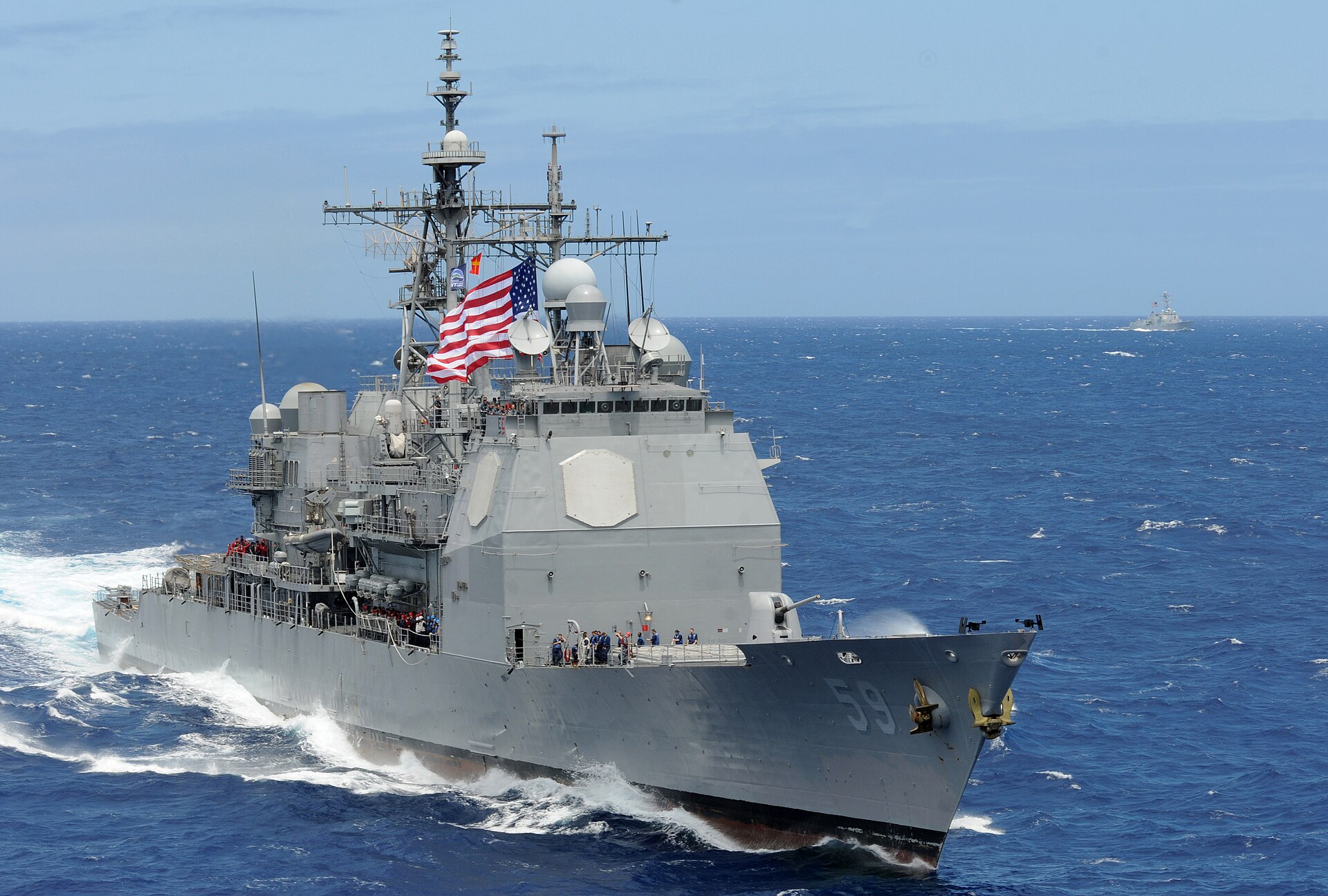
Source: Wikipedia Commons
Author: US navy
Date: 2012
If the videos documenting the Tic-Tac incident were only officially released after unauthorized leaks, what other footage or recordings of the encounter might still exist but remain withheld from the public?