
The Mystery Vault
Explore Cases
Contact Us
Frederick Valentich was a 20-year-old Australian pilot who disappeared during a 125-nautical-mile (232 km) private flight over Bass Strait, the stretch of water separating mainland Australia from the island state of Tasmania, on the evening of 21 October 1978. Flying a Cessna 182L light aircraft (registration VH-DSJ), Valentich departed from Moorabbin Airport in Melbourne, Victoria, and was bound for King Island, a small island in Bass Strait located between Victoria and Tasmania, where he claimed he was scheduled to collect passengers before returning later that night. During the flight, Valentich contacted Melbourne Air Traffic Control to report that an unidentified aircraft was flying approximately 1,000 feet (300 m) above him. Over the next several minutes, he described the object as having bright lights, moving at high speed, and orbiting above his aircraft. He also reported that his engine had begun running roughly before making his now-famous final transmission: "It's not an aircraft." Radio contact was then lost, followed by 17 seconds of unexplained metallic sounds. An extensive air and sea search of Bass Strait failed to locate either Valentich or his aircraft, and no confirmed trace of the Cessna has ever been found. The disappearance remains one of Australia's most enduring aviation mysteries, with proposed explanations ranging from spatial disorientation and mechanical failure to deliberate disappearance and alleged UFO involvement.
On the evening of 21 October 1978, twenty-year-old Australian pilot Frederick Valentich departed Moorabbin Airport on a routine flight to King Island. Flying a Cessna 182L light aircraft, registered VH-DSJ, Valentich was expected to complete the 125-nautical-mile (232 km) journey across Bass Strait without incident. During the flight, however, he contacted Melbourne Flight Service to report that an unidentified aircraft appeared to be following him. Over the next several minutes, Valentich described the object as flying above and around his aircraft while also reporting that his engine was running roughly. His final radio transmission was followed by seventeen seconds of unexplained metallic sounds before communication was lost. Despite an extensive air and sea search, neither Valentich nor his aircraft was located. The disappearance quickly attracted national and international attention, becoming one of Australia's most debated aviation mysteries. Although numerous investigations and theories have attempted to explain what happened that evening, no conclusive evidence has ever revealed the fate of Frederick Valentich or his aircraft.
Frederick Valentich was born on 9 June 1958 and developed an
early interest in aviation. He was a member of the
Royal Australian Air Force (RAAF) Air Training Corps
and aspired to become a commercial pilot. Valentich twice
applied to join the Royal Australian Air Force but was rejected
due to inadequate educational qualifications. Despite these
setbacks, he continued pursuing a career in aviation through
civilian flight training. At the time of his disappearance,
Valentich had accumulated approximately 150 hours of flying
experience and held a
Class Four Instrument Rating, which authorised him to fly at night only under
Visual Meteorological Conditions (VMC). He was studying part-time for a commercial pilot licence but
had experienced repeated academic difficulties, having twice
failed all five commercial licence examination subjects. In
September 1978, only one month before his disappearance, he
failed three of the examination subjects again.
Valentich's flying record also included several incidents. He
had received a warning after entering controlled airspace near
Sydney without the required clearance and had twice deliberately
flown into cloud, contrary to aviation regulations. These
incidents prompted aviation authorities to consider legal
action, although he continued flying while working toward his
commercial qualifications. According to his father, Guido
Valentich, Frederick had a long-standing interest in
unidentified flying objects (UFOs) and believed they existed.
His father later stated that he had expressed concerns about the
possibility of being attacked by one. Six days before his
disappearance, his girlfriend, Rhonda Rushton, recalled
discussing the possibility of a UFO taking him away. These
statements attracted considerable public attention following the
events of 21 October 1978. The purpose of Valentich's final
flight to
King Island
remains uncertain. He informed flight service personnel that he
intended to collect two friends, while telling others he was
travelling to collect crayfish. Subsequent investigations
determined that neither explanation was accurate. Investigators
also established that Valentich had not notified
King Island Airport
of his intended arrival or requested that the runway lighting be
activated, both of which would normally have been expected for a
night arrival.
On the evening of 21 October 1978, Frederick Valentich arrived
at
Moorabbin Airport
to undertake a private flight to
King Island, a journey of approximately 125 nautical miles (232 km). He
was flying a rented
Cessna 182L Skylane, registered VH-DSJ. Before departure, Valentich filed a flight
plan indicating that he would fly under
Visual Flight Rules (VFR)
at an altitude of 5,000 feet (1,500 m). The estimated flight
time was approximately 55 minutes. Weather conditions along the
planned route were generally favourable for visual flight.
Aviation reports indicated clear skies with good visibility over
much of
Bass Strait, although isolated cloud and light winds were present in some
areas. There were no reports of severe weather that would have
prevented the flight from proceeding under visual conditions.
Valentich departed Moorabbin Airport at approximately 6:19 p.m.
local time and initially followed his planned route toward King
Island. During the early stages of the flight, communications
with
Melbourne Flight Service
were routine, and nothing appeared to indicate that the flight
was experiencing difficulties. As the aircraft crossed Bass
Strait, however, the situation changed dramatically when
Valentich contacted flight service to report an unusual aircraft
flying above him.
At approximately 7:06 p.m., while flying over
Bass Strait, Frederick Valentich contacted
Melbourne Flight Service
to report that an unidentified aircraft was following his Cessna
at an altitude of approximately 4,500 feet (1,400 m). Air
traffic personnel informed him that there were no known aircraft
operating at that altitude in the area. Valentich stated that he
could observe a large aircraft illuminated by four bright
landing lights. He described the object as being long in shape,
although he was unable to identify its type. He reported that it
had passed approximately 1,000 feet (300 m) above his aircraft
while travelling at a high speed. As the encounter continued, he
reported that the object's behaviour appeared to change. He
advised that it was approaching from the east and later stated
that it was "orbiting" above his aircraft and, at one point,
appeared to be "hovering". During the exchange, Valentich
described the object as having a shiny metallic surface with a
green light visible on it.
Valentich further reported that the object appeared to be
following and approaching his aircraft. He stated that "it seems
to be chasing me" and later remarked that "it seems to be
playing some sort of game," indicating that he believed the
object's movements were deliberate. During the same
communication, he reported that his engine was experiencing
problems, describing it as "coughing." The controller asked
Valentich to identify the aircraft he was observing. Unable to
provide an explanation, Valentich's final recorded response was,
"It's not an aircraft." Immediately after the transmission,
radio communication was replaced by approximately seventeen
seconds of unexplained noise, described by investigators as
metallic scraping or grinding sounds. The transmission then
ended abruptly, and all subsequent attempts to re-establish
contact with Valentich were unsuccessful. Neither the pilot nor
his aircraft was seen again.
Following the loss of radio contact with Frederick Valentich on
21 October 1978, an extensive search operation was launched over
Bass Strait. The search involved multiple resources, including commercial
and naval vessels operating in the area, a
Royal Australian Air Force (RAAF) Lockheed P-3 Orion
aircraft, and eight civilian aircraft. Search teams covered an
area of more than 1,000 square miles (2,600 km²), but no trace
of Valentich or his aircraft was discovered. The search
operation was officially ended on 25 October 1978 without
success. An investigation by the
Australian Department of Transport
was unable to determine the cause of the disappearance. With no
evidence explaining what had happened, the case was recorded as
"presumed fatal" for Frederick Valentich.
The case gained renewed attention five years later when an
aircraft component was discovered washed ashore on
Flinders Island. The item was identified as an engine cowl flap from a Cessna
182 aircraft, a component used to control airflow around the
engine. Because the serial number range of the part was
consistent with Valentich's aircraft, investigators examined
whether it could have originated from VH-DSJ. In July 1983, the
Bureau of Air Safety Investigation
consulted the
Royal Australian Navy Research Laboratory
regarding whether the cowl flap could have drifted from the area
where Valentich's aircraft disappeared to the location where it
was found. However, the investigation was unable to conclusively
establish whether the component came from VH-DSJ or how it
reached Flinders Island. Despite the searches, official
investigations, and examination of the recovered aircraft part,
no confirmed explanation for the disappearance of Frederick
Valentich has ever been established.
The disappearance of Frederick Valentich remains one of
Australia's most well-known aviation mysteries. The unexplained
loss of a young pilot, combined with his unusual final radio
transmissions describing an unidentified aircraft, has kept
public interest in the case alive for more than four decades.
The incident has been widely discussed in aviation communities,
UFO research circles, and popular media. The lack of recovered
aircraft wreckage, definitive evidence, or a confirmed
explanation has allowed multiple interpretations of the event to
continue, ranging from conventional aviation explanations to
more unusual theories.
The case has also become a notable example of the challenges
involved in investigating disappearances over large bodies of
water. The vast area of
Bass Strait, combined with the absence of physical evidence, has made
determining the exact events of that evening extremely
difficult. More than forty years after his disappearance,
Frederick Valentich's final flight continues to be studied and
debated. While the circumstances surrounding the loss of VH-DSJ
remain unresolved, the case continues to hold a lasting place in
Australian aviation history.
Spatial disorientation is the leading conventional explanation for Frederick Valentich's disappearance and is widely supported by aviation experts. The theory proposes that while flying at night over Bass Strait, Valentich became disoriented due to the lack of visible landmarks and the difficulty of distinguishing the horizon from the dark sea and sky. In such conditions, a pilot can lose their sense of orientation and unknowingly place the aircraft into a dangerous attitude. According to this theory, the unidentified aircraft Valentich reported may have been a misinterpretation of lights from his own aircraft, celestial objects, or another natural visual phenomenon. His reports of the object circling, hovering, and following him could have resulted from his own aircraft manoeuvring while he was unaware of its true orientation. If the aircraft subsequently entered a descending spiral, Valentich may have mistaken the increasing engine noise and vibrations for mechanical problems before crashing into the sea.
Although spatial disorientation is regarded as the most likely explanation by many investigators, it does not account for every aspect of the incident. Valentich consistently described a large, long object with four bright lights, a shiny metallic surface, and a green light, details that some argue are difficult to attribute solely to visual illusion. The theory also does not fully explain his final statement, "It's not an aircraft," or the approximately seventeen seconds of unexplained metallic sounds recorded after his last transmission. Additionally, no confirmed wreckage of VH-DSJ has ever been recovered, leaving the theory unproven despite its widespread acceptance.
The deliberate disappearance theory proposes that Frederick Valentich intentionally staged his own disappearance. Supporters point to the conflicting reasons he gave for flying to King Island, his failure to notify the airport of his intended arrival, and the absence of any confirmed wreckage. They also note that his Cessna 182 is believed to have had sufficient fuel to fly approximately 800 km (500 mi), potentially allowing him to travel well beyond his planned destination. Additionally, despite favourable conditions, his aircraft was never positively tracked by radar near Cape Otway, and police received reports of a light aircraft making an unexplained landing near the area around the time of his disappearance.
There is no evidence that Valentich successfully disappeared or began a new life. No financial records, verified sightings, or other credible evidence have ever emerged to suggest that he survived the flight. Furthermore, the reported aircraft sighting near Cape Otway was never confirmed to be Valentich's Cessna, leaving the theory largely speculative and unsupported by conclusive evidence.
The mechanical failure theory suggests that Frederick Valentich's Cessna 182 suffered an engine malfunction during the flight. Supporters point to his radio transmissions in which he reported that the engine was "coughing," indicating that it may have been losing power or operating irregularly. Combined with the challenges of flying at night over Bass Strait, an engine failure could have forced the aircraft into the sea before Valentich was able to make an emergency landing or issue a distress call.
Although Valentich reported engine problems, the theory does not explain his repeated descriptions of an unidentified object following and manoeuvring around his aircraft. Additionally, no confirmed wreckage of the aircraft has ever been recovered to verify that a mechanical failure occurred, leaving the theory without direct physical evidence.
The UFO theory proposes that Frederick Valentich encountered an unidentified flying object while flying over Bass Strait. Supporters argue that his radio transmissions provide the strongest evidence, as he consistently described a large, long object with four bright lights, a shiny metallic surface, a green light, and unusual manoeuvres, including circling and hovering. They also point to his final statement, "It's not an aircraft," along with the unexplained metallic sounds that followed, as indications that he encountered something beyond conventional aviation. The complete disappearance of both Valentich and his aircraft has led some to speculate that he was abducted by an extraterrestrial craft.
The theory is not supported by any physical evidence. No radar data, photographs, recovered wreckage, or independent eyewitness accounts have confirmed the presence of an extraterrestrial craft in the area. Critics argue that Valentich may have misidentified a conventional object or experienced spatial disorientation, making the UFO hypothesis an extraordinary claim that remains unverified.
Source: TMV
Author: TMV (Made using 'My Maps')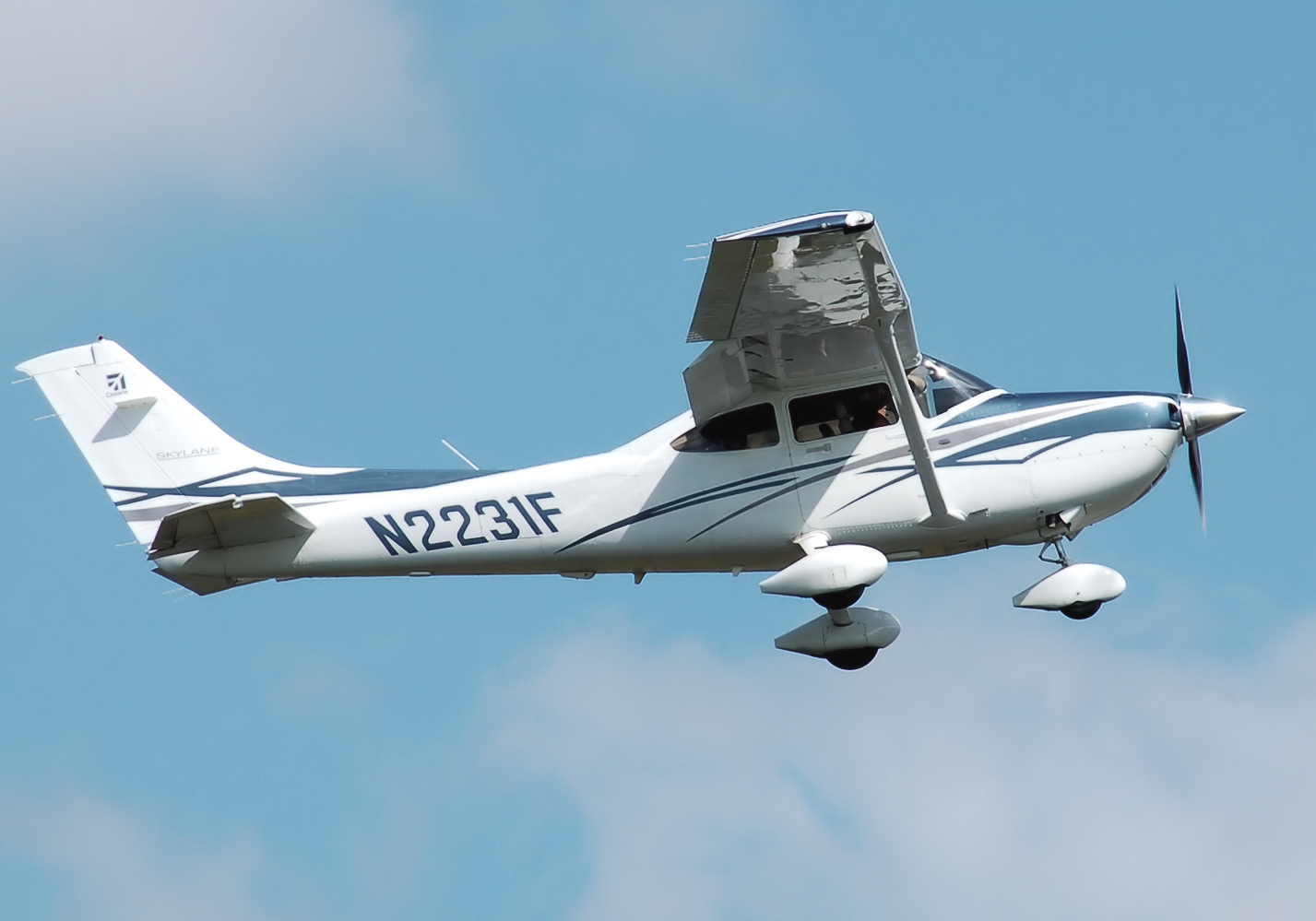
Source: Wikipedia Commons
Author: Adrian Pingstone
Date: 2010