Malaysia Airlines Flight 370 was a regularly scheduled international passenger service connecting Kuala Lumpur, Malaysia, with Beijing, China. In the early hours of 8 March 2014, the aircraft departed on what was expected to be a routine overnight journey carrying 239 passengers and crew. For the first part of the flight, everything appeared normal, with the aircraft following its planned route and communicating routinely with air traffic controllers.
Less than an hour after takeoff, however, the flight ceased normal communication and disappeared from civilian radar under circumstances that have never been fully explained. What followed was one of the largest and most complex multinational search operations ever undertaken, involving dozens of countries, advanced technology, and years of investigation. Despite extensive efforts and the recovery of several confirmed pieces of debris, the aircraft's main wreckage has never been found, leaving Flight MH370 as one of the most enduring unsolved mysteries in the history of commercial aviation.
Aircraft
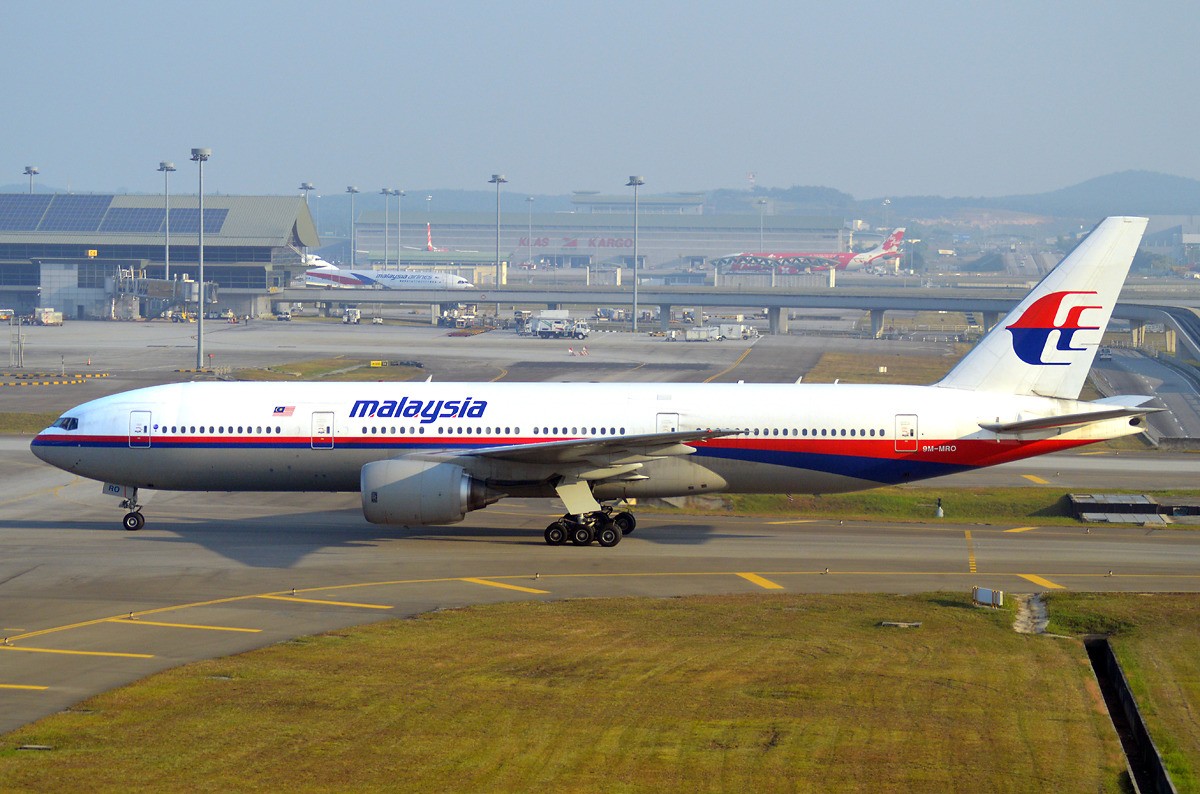
The aircraft involved in the disappearance, Malaysia Airlines Flight 370, was a Boeing 777-2H6ER bearing the registration 9M-MRO and manufacturer's serial number 28420. It entered service with Malaysia Airlines on 31 May 2002 after being delivered directly from Boeing. Designed for long-haul operations, the aircraft was powered by two Rolls-Royce Trent 892 turbofan engines and was configured to carry up to 282 passengers.
Over nearly twelve years of service, the aircraft logged more than 53,000 flight hours and completed over 7,500 takeoffs and landings. It had built a reliable operational history and was not associated with any serious accidents. The only recorded incident occurred in August 2012 at Shanghai Pudong International Airport, where its wingtip was damaged during taxiing. The damage was minor, repaired, and the aircraft soon returned to regular passenger service.
Maintenance records showed that the aircraft had undergone its latest scheduled A-check inspection on 23 February 2014, just two weeks before its disappearance. Investigators later confirmed that the aircraft met all required airworthiness standards and that no outstanding mechanical issues had been identified before the flight. On 7 March 2014, the day before departure, technicians performed routine servicing of the crew oxygen system. Documents released years later also revealed that the aircraft received supplemental fuel and additional crew oxygen shortly before takeoff, although investigators found no evidence that either procedure played a role in the disappearance.
Occupants
Flight MH370 departed with 239 people on board, comprising 12 crew members and 227 passengers representing 14 nationalities. Shortly after the aircraft disappeared, Malaysia Airlines released the names and nationalities of those on board using the flight manifest. The passenger list was later updated after investigators confirmed that two Iranian passengers had travelled using stolen passports.
All 12 crew members were Malaysian citizens, including two pilots and ten cabin crew. The aircraft was commanded by 52-year-old Captain Zaharie Ahmad Shah, an experienced pilot from Penang. Having joined Malaysia Airlines as a cadet in 1981, he spent more than three decades with the airline, progressing through several aircraft types before becoming a captain on the Boeing 777-200. He was also qualified as both a type-rating instructor and examiner, and had accumulated more than 18,000 hours of flight experience.
The First Officer was 26-year-old Fariq Abdul Hamid, who joined Malaysia Airlines as a cadet pilot in 2007. After flying the Boeing 737-400 and later the Airbus A330-300, he began training on the Boeing 777-200 in late 2013. Flight MH370 was his final supervised training flight before his scheduled competency assessment. By the time of the disappearance, he had logged more than 2,700 hours in the air.
Among the 227 passengers, 153 were Chinese nationals, while 38 were Malaysian citizens. The remaining passengers represented 12 other countries. The flight also carried 20 employees of Freescale Semiconductor, along with a group of Chinese artists, their relatives, and support staff returning home after exhibiting their calligraphy in Kuala Lumpur.
In the hours following the disappearance, support efforts were launched for the families of those on board. Tzu Chi Foundation dispatched trained volunteers to both Malaysia and China to provide emotional assistance, while Malaysia Airlines arranged accommodation, counselling, medical care, and travel for relatives who wished to travel to Kuala Lumpur. As the search expanded, hundreds of family members gathered in Malaysia and China, hoping for news that, tragically, never came.
Departure
Malaysia Airlines Flight MH370 was scheduled to operate an overnight service from Kuala Lumpur International Airport, Malaysia, to Beijing Capital International Airport, China, during the early hours of Saturday, 8 March 2014. It was one of two daily Malaysia Airlines flights connecting the two cities and was scheduled to depart at 00:35 local time before arriving in Beijing at 06:30 the same morning. On board were two pilots, ten cabin crew, 227 passengers, and more than 14 tonnes of cargo.
The journey was expected to last approximately five and a half hours. To complete the flight safely, the aircraft carried more than 49,000 kilograms of fuel, providing an endurance of around seven and a half hours—well beyond the planned flight time. The additional fuel was intended to allow diversions to alternate airports if necessary, in accordance with standard aviation safety procedures.
At 00:42 local time, the Boeing 777-2H6ER departed from Runway 32R and was cleared by air traffic control to climb toward its assigned cruising altitude while proceeding to the navigational waypoint IGARI. Analysis of cockpit voice communications later indicated that the First Officer handled radio communications before takeoff, while Captain Zaharie Ahmad Shah assumed responsibility for communications after the aircraft became airborne.
Soon after departure, responsibility for the flight was transferred from the airport control tower to the Kuala Lumpur Area Control Centre, where controllers monitored the aircraft as it climbed to its assigned cruising altitude. At 01:01, the crew reported reaching the assigned altitude, and a routine confirmation was transmitted several minutes later. At that stage, the flight appeared to be progressing exactly as planned, with no indication that anything was out of the ordinary.
Disappearance
The last routine transmission from Flight MH370 was an automated report sent through the Aircraft Communications Addressing and Reporting System (ACARS) at 01:06 local time. Among the information transmitted was the aircraft's remaining fuel quantity. Approximately thirteen minutes later, at 01:19:30, Captain Zaharie Ahmad Shah made the flight's final radio transmission while acknowledging instructions to transfer communications from Lumpur Radar to the Ho Chi Minh Area Control Centre (ACC), the Vietnamese air traffic control authority responsible for the next section of the flight.
Lumpur Radar: "Malaysian three seven zero, contact Ho Chi Minh one two zero decimal nine. Good night."
Flight MH370: "Good night. Malaysian three seven zero."
The crew never established contact with controllers at
Ho Chi Minh ACC as the aircraft entered Vietnamese airspace. As the aircraft approached the navigational waypoint
IGARI, its
transponder stopped transmitting. At 01:21, the aircraft disappeared from civilian secondary radar while maintaining its assigned cruising altitude and speed. Weather conditions along the route were favourable, with no significant storms or turbulence reported.
Although civilian radar had lost the aircraft,
primary military radar continued tracking an unidentified target believed to be Flight MH370. Instead of continuing toward Beijing, the aircraft unexpectedly turned back, crossed the
Malay Peninsula, flew over the
Strait of Malacca, and continued northwest. The final military radar contact occurred at approximately 02:22, northwest of
Penang, after which the aircraft disappeared completely from radar coverage.
While the aircraft was making this unexpected diversion, its satellite communication system, which had briefly gone offline, unexpectedly logged back onto the
Inmarsat satellite network at 02:25. Over the following six hours, the aircraft automatically responded to hourly satellite handshake requests, while two telephone calls placed from the ground went unanswered. The final successful satellite communication occurred at 08:19, after which no further responses were received.
Meanwhile, controllers at
Ho Chi Minh ACC repeatedly attempted to establish contact with Flight MH370 after it failed to check in. Nearby aircraft were also asked to call the flight on both standard and emergency frequencies, but no response was ever received. As confusion grew,
Malaysia Airlines Flight 386 also attempted to contact the missing aircraft without success.
At 07:24,
Malaysia Airlines released its first public statement announcing that communication with Flight MH370 had been lost and that search-and-rescue operations had begun. Unknown to investigators at the time, the aircraft had likely remained airborne for several hours after disappearing from radar. Later analysis of the satellite handshake data led investigators to conclude that the aircraft continued flying until fuel exhaustion before crashing somewhere in the southern
Indian Ocean.
Search and Investigation
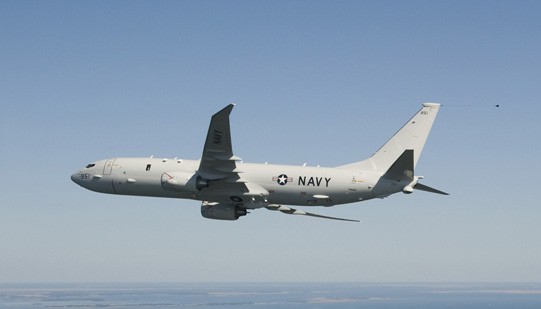
Within hours of Flight MH370's disappearance, authorities launched a large-scale search-and-rescue operation centred on the South China Sea and the Gulf of Thailand, where the aircraft was initially believed to have been flying. As new information emerged, however, investigators discovered that the aircraft had unexpectedly turned back after disappearing from civilian radar. Search efforts were quickly expanded to include the Strait of Malacca, the Andaman Sea, and the Bay of Bengal.
A major breakthrough came when investigators analysed communication records exchanged between the aircraft and an Inmarsat satellite. Although the aircraft had vanished from radar, the satellite data indicated that it had remained airborne for almost six hours after its last confirmed radar contact. The analysis produced two possible flight corridors extending north and south from the satellite's position. The northern route was eventually ruled out because the aircraft would have crossed heavily monitored airspace, where military radar systems would likely have detected it.
Attention then shifted to the southern corridor, directing the search toward one of the most remote regions of the Indian Ocean. Australia took responsibility for coordinating the southern Indian Ocean search, focusing on an enormous area west of the country within its maritime and aviation search-and-rescue regions. The region presented extreme challenges for search teams, with powerful winds, rough seas, remote conditions, and some of the deepest ocean floors on Earth.
The initial surface search covered hundreds of thousands of square kilometres of ocean southwest of Perth, Western Australia. Satellite images were examined for possible debris, and several objects of interest were identified, but none were confirmed to be connected to Flight MH370. As investigators continued refining their calculations using radar data and the aircraft's remaining fuel, the search area was repeatedly adjusted.
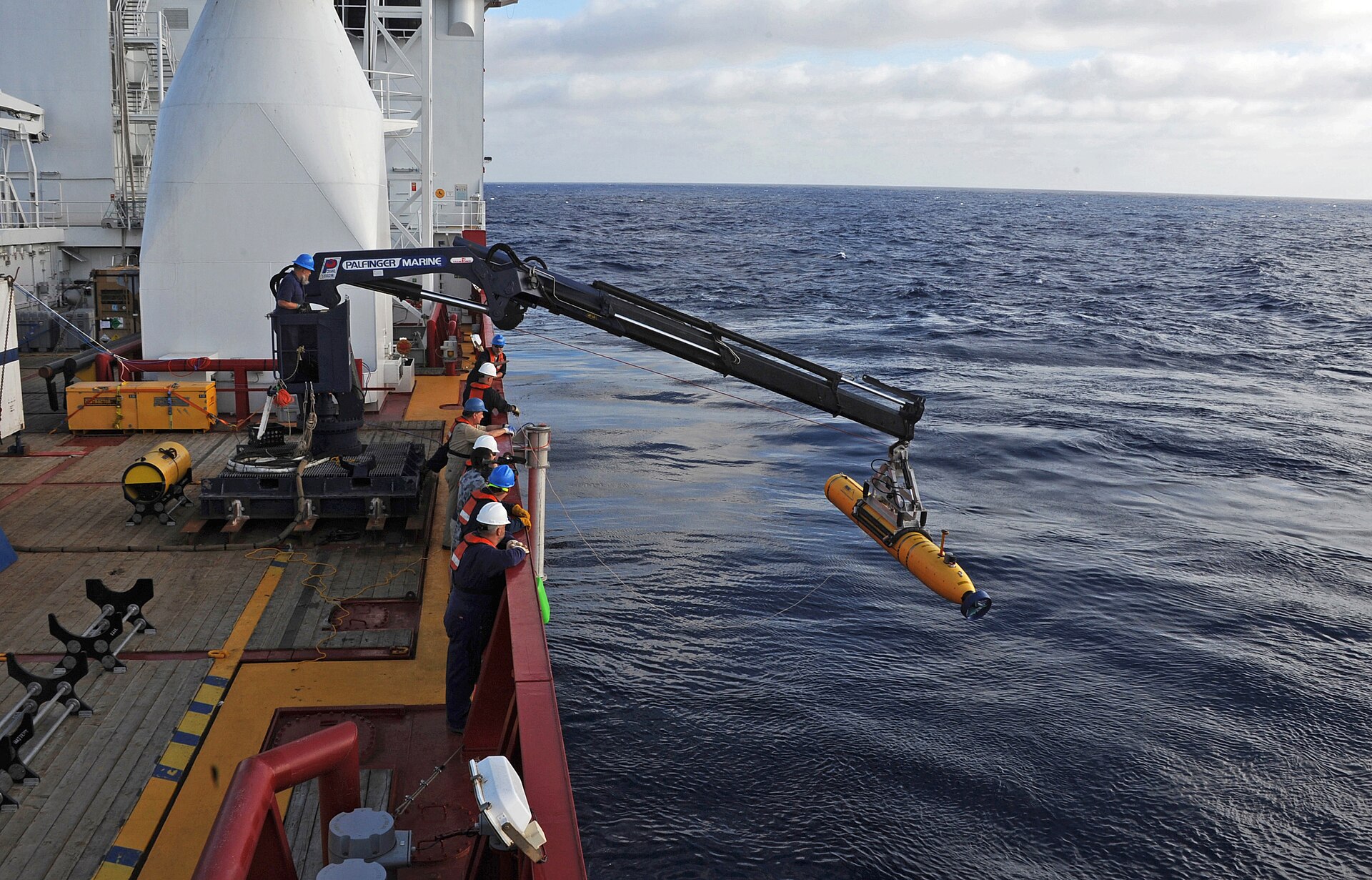
In April 2014, attention shifted toward locating the aircraft's flight recorders by searching for signals from their underwater locator beacons. Several vessels equipped with specialised detection equipment attempted to locate the expected acoustic signals, and a number of possible detections briefly raised hope that the wreckage had been found. However, subsequent analysis and underwater surveys failed to locate any evidence of the aircraft.
The following phase involved a detailed sonar survey of the ocean floor along the satellite-derived search corridor known as the "7th arc". Beginning in October 2014, vessels equipped with advanced underwater scanning equipment searched a designated 120,000-square-kilometre area of seabed. Despite months of operations and the use of specialised underwater vehicles, the search found no sign of the aircraft's main wreckage.
On 30 March 2014, the Joint Agency Coordination Centre (JACC) assumed responsibility for coordinating the multinational search, working closely with the governments of Malaysia, Australia, and China. The operation eventually became the largest and most expensive search effort in aviation history, covering millions of square kilometres across both the ocean's surface and seabed.
On 17 January 2017, Malaysia, Australia, and China jointly announced the suspension of the official search for Flight MH370. The underwater search had cost approximately US$155 million and had narrowed the likely crash region to a large area of the southern Indian Ocean, but the aircraft's main wreckage remained undiscovered.
Hope of locating the aircraft was briefly renewed in January 2018, when the American marine exploration company Ocean Infinity launched a privately funded search using the vessel Seabed Constructor. The search area was expanded significantly, and the company examined more than 112,000 square kilometres of ocean floor using advanced underwater technology. Despite this renewed effort, the mission concluded in June 2018 without locating the missing aircraft.
List Of The 26 countries officially involved in the multinational search for Malaysia Airlines Flight 370:
Australia
Bangladesh
Brunei
Cambodia
China
France
India
Indonesia
Japan
Kazakhstan
Kyrgyzstan
Laos
Malaysia
Myanmar
New Zealand
Norway
Pakistan
Philippinse
Russia
Singapore
South Korea
Thailand
Turkmenistan
United Arab Emirates
United Kingdom
United States
Recovered Evidence
For more than a year after Flight MH370 disappeared, no physical evidence of the aircraft was found. That changed on 29 July 2015, when a large piece of aircraft wreckage washed ashore on the French island of Réunion, approximately 4,000 kilometres west of the official search area. The component was identified as the aircraft's right flaperon, making it the first piece of MH370 to be conclusively recovered.
The flaperon was transported to Toulouse, France, where specialists from the Bureau of Enquiry and Analysis for Civil Aviation Safety (BEA) examined the wreckage alongside Malaysian investigators. On 3 September 2015, investigators confirmed that serial numbers recovered from internal components matched those of Flight MH370, conclusively linking the flaperon to the missing aircraft.
The discovery prompted renewed searches around Réunion and neighbouring coastlines. Investigators also examined marine growth attached to the flaperon, particularly Lepas anatifera barnacles, in an effort to better understand how the debris had drifted across the Indian Ocean.
Over the following months, additional pieces of wreckage were recovered from beaches across the western Indian Ocean, including locations in Mozambique, Mauritius, Madagascar, Tanzania, and South Africa. Several of these fragments—including sections of the right horizontal stabiliser, a flap track fairing, and an outboard wing flap—were confirmed or assessed as almost certainly originating from Flight MH370.
By October 2017, investigators had recovered twenty pieces of debris believed to have come from the aircraft. Eighteen were identified as either almost certainly or very likely originating from MH370, while the remaining two were considered probable matches. The distribution of the recovered debris closely matched ocean-drift models developed by investigators, reinforcing the conclusion that the aircraft had entered the southern Indian Ocean.
Despite these discoveries, the aircraft's main fuselage, cockpit voice recorder, flight data recorder, and the majority of the wreckage have never been found. The recovered debris has provided valuable clues about the aircraft's final journey, but it has not revealed why Flight MH370 disappeared or what occurred during its final moments.
Although the official multinational search ended in 2017, efforts to locate Flight MH370 did not stop. In January 2018, the American marine exploration company Ocean Infinity launched a privately funded search under a "no find, no fee" agreement with the Malaysian government. Using the Norwegian vessel Seabed Constructor and a fleet of autonomous underwater vehicles, the company searched more than 112,000 square kilometres of the southern Indian Ocean, including areas beyond the original search zone. Despite months of searching, no trace of the aircraft was found, and the operation concluded in June 2018.
In the years that followed, Malaysia remained open to considering credible new evidence that could justify another search. Ocean Infinity repeatedly expressed its willingness to return, believing that improvements in technology and a reassessment of existing data could increase the chances of success. The company maintained that the aircraft's most likely resting place remained somewhere along the satellite-derived "7th arc".
On the tenth anniversary of the disappearance in 2024, Malaysia announced that it was consulting with Australia regarding another search. Later that year, the Malaysian government approved a new agreement with Ocean Infinity, once again on a "no find, no fee" basis. Search operations resumed in early 2025 but were temporarily suspended because of seasonal weather conditions in the southern Indian Ocean.
The search resumed once more at the end of December 2025 using Ocean Infinity's Armada 86 05 and autonomous underwater vehicles. After several weeks of searching, the operation concluded on 23 January 2026 without locating the missing aircraft.
More than a decade after Flight MH370 disappeared, its main wreckage has still not been found. Despite repeated international search efforts involving governments, private companies, and some of the most advanced underwater technology ever deployed, the aircraft's final resting place remains one of aviation's greatest unsolved mysteries.
Legacy
The disappearance of Flight MH370 remains one of the most significant events in modern aviation history. Never before had a large commercial airliner vanished so completely during a routine international flight without a confirmed cause or a known crash location. The mystery exposed limitations in global aircraft tracking and prompted widespread discussion about how commercial flights are monitored over remote oceans.
In the years following the disappearance, aviation authorities introduced new measures designed to improve aircraft tracking and emergency reporting. Airlines and regulators adopted stricter standards requiring aircraft to transmit their position more frequently, particularly during long-haul flights over isolated regions. Advances in satellite-based tracking have also reduced the likelihood of another commercial aircraft disappearing without leaving a trace.
Beyond its impact on aviation, Flight MH370 has remained a subject of global interest. Numerous documentaries, books, scientific studies, and independent investigations have examined the disappearance, while researchers continue to analyse satellite data, ocean currents, and recovered debris in the hope of determining the aircraft's final location.
For the families of the 239 people aboard, however, the mystery remains deeply personal. With the aircraft's main wreckage still undiscovered and no definitive explanation for its disappearance, many continue to seek answers more than a decade after the flight vanished. Until those answers are found, Flight MH370 will remain one of the greatest unsolved mysteries in aviation history.