
The Mystery Vault
Explore Cases
Contact Us
On March 16, 1962, Flying Tiger Line Flight 739 disappeared while flying over the western Pacific Ocean on a military charter mission from Guam to the Philippines. The aircraft, a Lockheed L-1049 Super Constellation carrying 107 people, was last heard from after a routine position report. Shortly after that, it vanished completely from radar and radio contact without sending any distress signal. Despite an extensive search covering hundreds of thousands of square miles of ocean, no confirmed wreckage was ever recovered. A nearby ship later reported seeing a bright flash and falling fiery objects in the sky, leading investigators to suspect a possible in-flight catastrophe. However, the exact cause of the disappearance was never determined, leaving Flight 739 as one of aviation’s enduring mysteries.
Flight 739 vanished over the western Pacific Ocean under unexplained circumstances. The aircraft had been chartered by the United States Army and was carrying ninety-six military passengers on a long-distance transfer from Travis Air Force Base in California to Saigon, South Vietnam. The flight followed its planned route and completed a scheduled refueling stop at Andersen Air Force Base in Guam before continuing toward Clark Air Base in the Philippines. It was during this next segment that contact with the aircraft was lost entirely. No distress call was transmitted, and the aircraft never arrived at its destination. All 107 people aboard were later declared missing and presumed dead.
A large-scale search operation was launched immediately, involving air and naval units from multiple branches of the U.S. military. Over an eight-day period, search teams covered more than 144,000 square miles (370,000 km²) of the Pacific Ocean. Despite the scale of the effort, no confirmed wreckage or definitive evidence of the aircraft’s fate was ever located.
Aircraft: Lockheed Constellation L-1049H
Registration:N6921C
Flight Origin: Travis Air Force Base California, US
Destination: Saigon, South Vietnam
Occupants: 107
Passengers: 96
Crew: 11
Fatalities: 107(assumed)
Survivors: 0 (assumed)
Missing: 107
The aircraft involved was a Lockheed L-1049H Super Constellation with approximately five years of service and over 17,000 airframe hours logged. Operated by the Flying Tiger Line under the designation Military Air Transport Service (MATS) Flight 739, it was chartered by the United States Army for a long-range troop transport mission. On board were eleven civilian crew members and ninety-six military passengers. The majority of the passengers were U.S. Army Ranger-trained communications specialists being deployed to South Vietnam to replace personnel involved in training South Vietnamese forces against Viet Cong operations. Three members of the South Vietnamese military were also among the passengers. The flight was under the command of Captain Gregory P. Thomas, and the crew structure consisted of three pilots, two flight engineers, and two navigators/radio operators, all operating from the aircraft’s civilian flight team based in California.
The journey began from Travis Air Force Base in California at 05:45 GMT on March 14, 1962. The planned route included multiple scheduled refueling stops at Honolulu, Wake Island, Guam, and finally Clark Air Base in the Philippines before continuing onward to Saigon. Delays occurred earlier in the trip due to minor maintenance work on engines one and three, but the aircraft successfully reached Andersen Air Force Base in Guam at 11:14 GMT on March 15. After refueling, Flight 739 departed Guam at 12:57 GMT, carrying sufficient fuel for the approximately 1,600-mile (2,600 km) leg toward the Philippines, with an estimated arrival time of 19:16 GMT. About eighty minutes into the flight, at 14:22 GMT, the captain transmitted a routine position report indicating the aircraft was roughly 280 nautical miles west of Guam. This would be its final confirmed communication. Shortly afterward, temporary radio interference was reported in the Guam area, and by 15:39 GMT, all attempts to re-establish contact had failed. The aircraft was never heard from again.
Following the disappearance, the Clark Field Rescue Coordination Center formally declared Flight 739 missing on the morning of March 16, 1962. Initial assessments by U.S. Navy personnel suggested the most probable crash area lay nearer to Guam than the Philippines, based on the aircraft’s last confirmed position and expected route progression. Despite highly favorable environmental conditions at the time—clear weather and calm sea states across the western Pacific—no immediate trace of the aircraft was detected. Multiple branches of the U.S. military, including the Navy, Air Force, Coast Guard, and Marine units, were rapidly deployed, marking the beginning of a large-scale coordinated search effort across a vast ocean region.
In the earliest phase of the operation, search assets worked continuously, including overnight sorties. Within approximately two days, coordinated air and sea sweeps had already covered tens of thousands of square miles of ocean. Early official statements reflected cautious optimism, emphasizing that the effort was being pursued at maximum intensity and that survival could not yet be ruled out. As the search expanded, additional support was drawn from major regional U.S. military hubs, including Clark Air Base, the Seventh Fleet, and Air Force units stationed in Okinawa. The operation grew into one of the largest maritime-air searches conducted in the Pacific at the time. However, even as coverage expanded dramatically, no confirmed debris field, oil slick, or life-related signals were identified—something that significantly reduced expectations over time.
One of the most puzzling aspects of the investigation was the complete absence of confirmed wreckage. Despite an extensive search across a massive stretch of the western Pacific, no identifiable debris field, oil slick, or floating materials were recovered that could be directly linked to Flight 739. In aviation accidents over land or shallower waters, even catastrophic breakups often leave traceable evidence; here, however, the ocean surface yielded nothing conclusive. The most widely accepted explanation is simply the depth and scale of the search environment. The western Pacific in that region is extremely deep, and drifting debris in open ocean conditions can disperse rapidly over time, especially if an aircraft breaks up at high altitude or sinks quickly after impact. This combination of vast search area, deep water, and ocean currents likely contributed to the absence of recoverable physical evidence.
By the fourth day, officials were already publicly acknowledging that the likelihood of survivors was diminishing, although the search continued under the principle that all reasonable possibilities must be exhausted. After eight days of continuous operations, covering over 200,000 square miles (520,000 km²), the search was officially terminated without results. Despite the scale and coordination of the effort, no verifiable physical evidence of Flight 739 was ever recovered, and no definitive explanation for its disappearance was established during the investigation phase.
For decades after the disappearance of Flight 739, families of the passengers and crew struggled to find formal recognition for those lost aboard the aircraft. Because the mission was connected to the early stages of U.S. involvement in Vietnam and ended without a confirmed crash site or recovered remains, many relatives felt that the sacrifice of those on board had largely faded from public memory. In 2021, a granite memorial dedicated to the 107 people aboard Flight 739 was unveiled in Columbia Falls, Maine, by the organization Wreaths Across America. The monument bears the names of the 93 U.S. Army personnel and 11 civilian crew members lost in the disappearance, ensuring that those who never returned would still be remembered. More than half a century after the aircraft vanished, the memorial became a place of recognition for families seeking to honor their loved ones and preserve the memory of one of aviation's enduring mysteries.
Sabotage or Conspiracy One of the earliest theories to emerge after the disappearance of Flight 739 involved the possibility of sabotage or a broader conspiracy. The idea gained attention because Flight 739 was not the only Flying Tiger Line aircraft with military connections to suffer a serious incident on March 14, 1962. On the same day that Flight 739 departed Travis Air Force Base carrying military personnel bound for Southeast Asia, another Flying Tiger Line Lockheed L-1049 Super Constellation also left the base. Unlike Flight 739, that aircraft's fate is known—it later crashed in the Aleutian Islands while transporting what was described as "secret military cargo" and was subsequently destroyed by fire. The coincidence of two military-linked Flying Tiger Line aircraft encountering major incidents on the same day naturally attracted public attention. Newspapers and aviation observers began speculating about possible links between the two events, while questions were raised about whether Flight 739 could have been intentionally targeted. In response to growing speculation, Flying Tiger Line officials acknowledged that possibilities such as sabotage or even the hijacking of Flight 739 had been considered. However, the airline emphasized that these ideas were little more than educated guesses at the time and stated that no evidence had been found to support either scenario. **Assessment:** While the unusual timing of the two incidents fueled suspicions, investigators never uncovered evidence linking the events. As a result, the sabotage and conspiracy theory remains one of the more widely discussed explanations, but it is supported primarily by circumstance rather than confirmed facts.
One of the most credible explanations for the disappearance of Flight 739 is that the aircraft was destroyed by an explosion while still in flight. This theory is largely based on observations made by crew members aboard the Liberian tanker SS T. L. Linzen, who reported seeing a brilliant flash of light in the sky near the aircraft's expected position approximately ninety minutes after its final radio transmission. Witnesses described the flash as powerful enough to illuminate the ship's deck, followed by two glowing red objects descending toward the ocean at different speeds. The tanker immediately changed course and conducted a six-hour search of the area, but no debris, oil slick, or other evidence was found. A subsequent investigation by the Civil Aeronautics Board determined that members of the tanker crew had also observed what appeared to be vapor trails associated with the event. As search efforts continued without locating the missing aircraft, military officials increasingly considered the possibility that the tanker had witnessed Flight 739 breaking apart in midair. Flying Tiger Line representatives likewise stated that if an explosion had occurred, it would support earlier concerns that the aircraft had been subjected to some unusual or violent event, arguing that a catastrophic breakup was unlikely to occur during normal operations. Although no physical evidence was ever recovered, the Civil Aeronautics Board ultimately concluded that the available information pointed toward the aircraft having been destroyed in flight. However, without wreckage or other corroborating evidence, investigators were unable to determine the cause of the suspected explosion or state with certainty that the lights observed by the tanker were connected to Flight 739. As a result, the mid-air explosion theory remains the most widely accepted explanation, while the circumstances behind such an event continue to be unknown.
The hostile action theory emerged largely because of the nature of Flight 739's mission and the historical period in which it disappeared. The aircraft was carrying ninety-three U.S. Army communications specialists and three South Vietnamese military personnel to Southeast Asia during a time of rising Cold War tensions. In early 1962, the United States was expanding its involvement in Vietnam, while geopolitical rivalry between the United States and communist powers remained at a peak. Against this backdrop, some observers speculated that the aircraft may have been deliberately targeted by a foreign government, intelligence agency, or another hostile group. The sudden loss of contact, the absence of a distress call, and later reports of a bright flash in the sky all contributed to the theory's appeal. Despite these circumstances, little evidence exists to support the idea of an attack. No government, military organization, or militant group ever claimed responsibility for the disappearance, and investigators found no physical evidence indicating that the aircraft had been intercepted or destroyed by hostile forces. Furthermore, the area where Flight 739 vanished was not considered an active combat zone. While the Cold War environment and the military significance of the passengers provide understandable reasons for considering the theory, most researchers view it as a speculative possibility rather than a probable explanation. In the absence of supporting evidence, hostile action remains one of several proposed theories rather than a conclusion supported by the investigation.
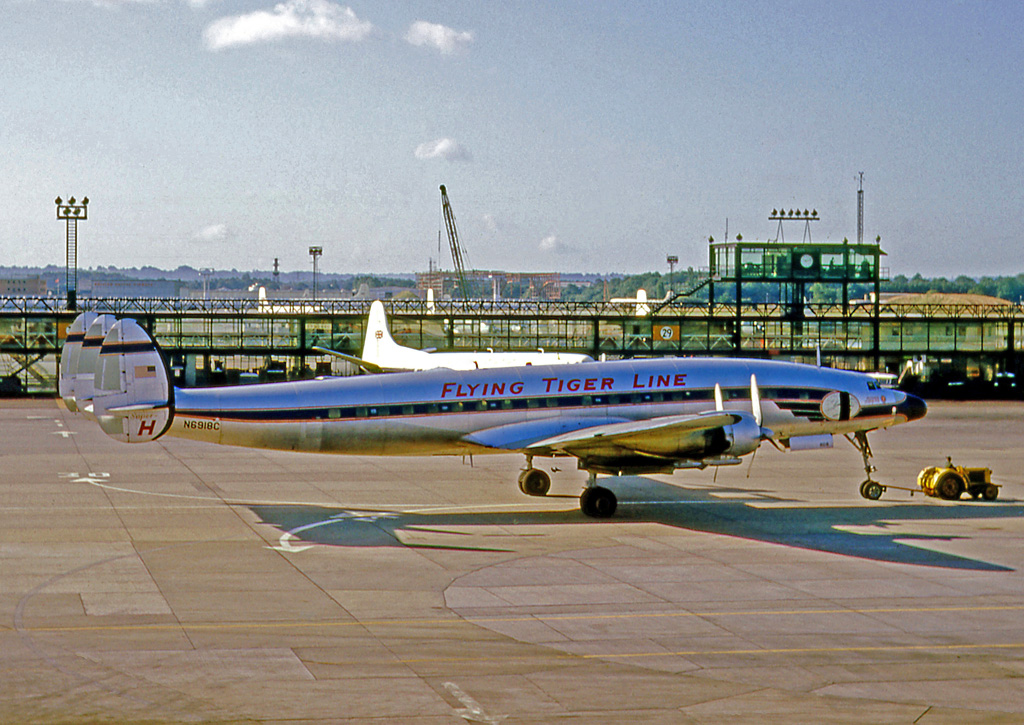
Source: Wikipedia Commons
Author: RuthAS
Date: 1964
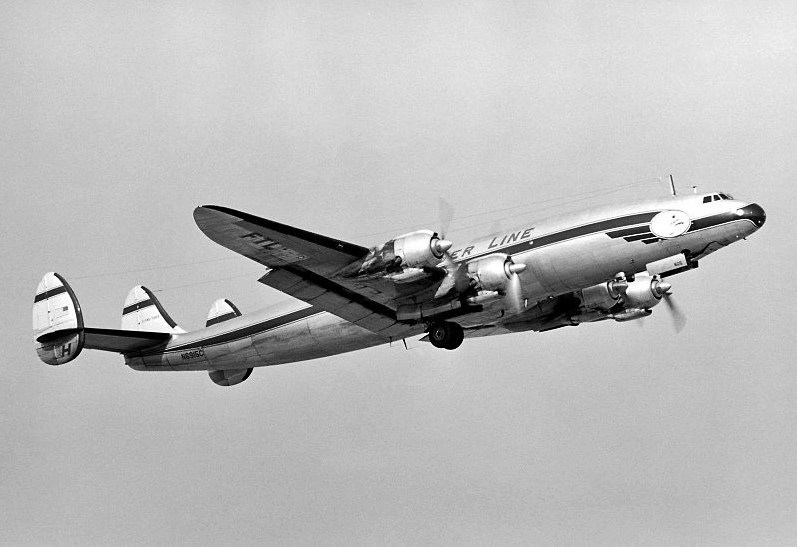
Source: Bureau of Aircraft Accident Archives
Author: Bureau of Aircraft Accident Archives
Date: 24 December 1964